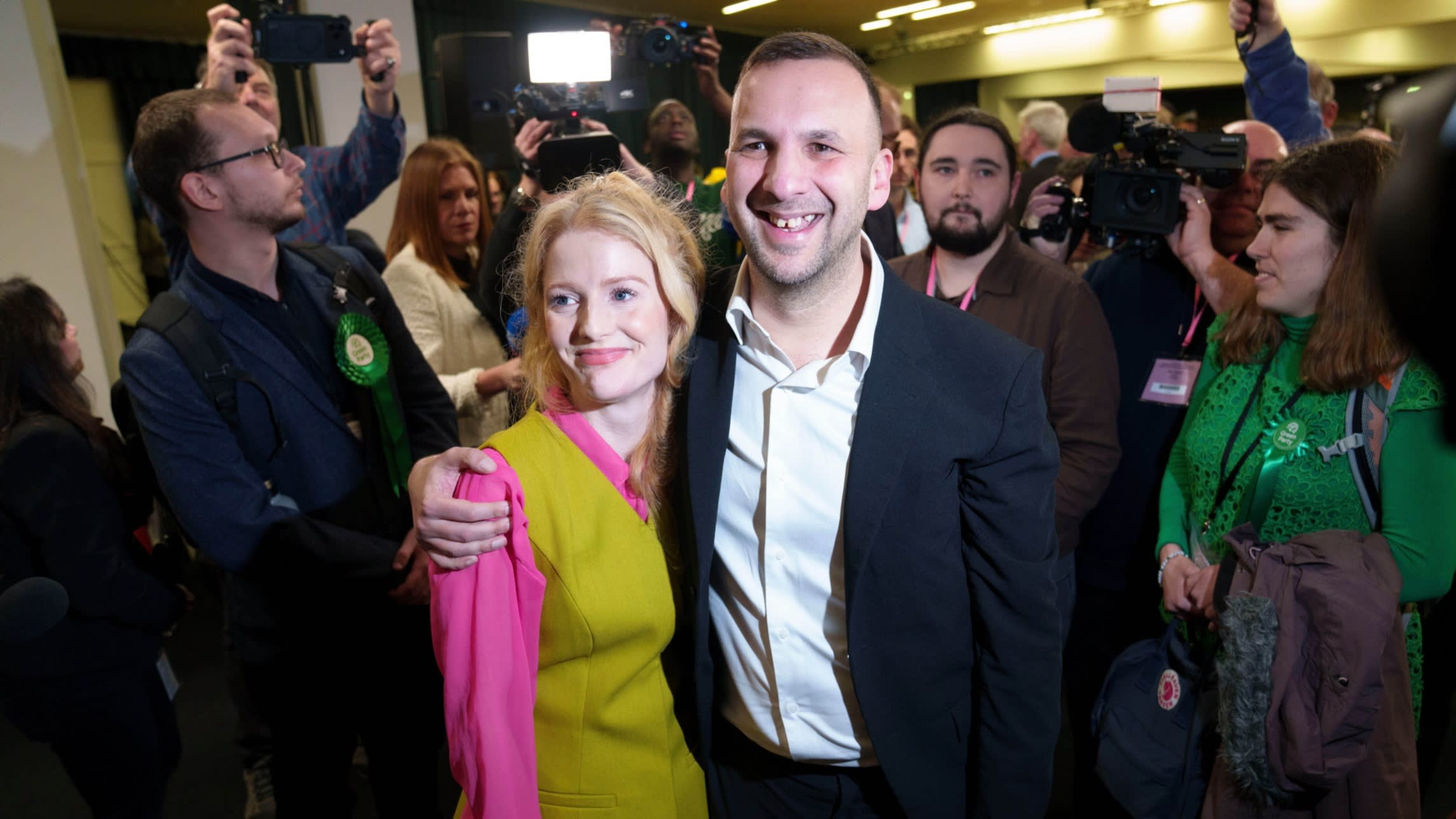
The political landscape of the United Kingdom is experiencing a significant tremor, one that signals a deeper ideological shift beneath the surface of seemingly conventional politics. While national polls often predict a Labour landslide in the upcoming general election, recent events, particularly the Green Party's historic by-election victory in Gorton and Denton, offer a compelling counter-narrative. This upset, where the Green Party's Hannah Spencer secured a seat traditionally considered a Labour stronghold, dramatically highlights a growing disconnect between Keir Starmer's increasingly centrist Labour Party and a segment of left-wing voters who feel increasingly unrepresented.
For years, Keir Starmer has meticulously steered the Labour Party away from the socialist legacy of Jeremy Corbyn, aiming to reclaim the political mainstream and restore public trust after the crushing 2019 general election defeat. His strategy involves stressing fiscal responsibility, reassuring businesses, and distancing Labour from accusations of anti-business sentiment and antisemitism that plagued the previous leadership. However, this strategic pivot, while appealing to some moderate voters, has inadvertently created a vacuum on the left, which the UK Green Party is now expertly filling, drawing disillusioned voters who prioritize climate action and social justice.
The Shifting Sands of British Politics: Starmer's Centrist Strategy and its Fallout
Keir Starmer's journey to reshape the Labour Party has been a calculated and deliberate effort to make it electable again. His vision aims to present Labour as a credible government-in-waiting, fiscally prudent, and palatable to a broad electorate, including swing voters in traditional Conservative areas. By moving to the center ground, Starmer hopes to reassure wary businesses and conservative-leaning voters that a Labour government would be a responsible steward of the economy, a stark contrast to the radical policies often associated with the Corbyn era.
However, this shift has not come without significant internal and external challenges. Many long-standing Labour supporters, particularly those on the party's left flank, feel that Labour has abandoned its core principles in pursuit of power. The perceived ideological dilution has left them feeling politically homeless. A key example of this disillusionment came with Labour's recent backtracking on a previous pledge to invest £28 billion annually in green infrastructure projects. This U-turn, intended to demonstrate fiscal caution, was a bitter pill for environmentalists and left-wing voters who saw it as a capitulation to conservative economic narratives and a betrayal of climate commitments.
As Sue Shanks, a local Green Party leader, eloquently put it, "There is a lot of disillusionment around about the fact that they have ditched that policy." This sentiment echoes across various left-leaning demographics, who perceive Starmer's Labour as increasingly indistinguishable from the very conservatism it seeks to replace. Such moves inadvertently push principled voters towards alternatives like the Green Party, which consistently champions bold environmental policies and progressive social reforms, making the Green Party's Historic UK By-Election Win Deals Blow to Starmer all the more significant.
Why Left-Wing Voters are Looking Beyond Labour: Principles Over Pragmatism
For many traditional left-wing voters, the choice in an election goes beyond mere tactical voting; it's about aligning with a party that genuinely reflects their values and aspirations for a fairer, more sustainable society. Starmer's centrist pivot, while perhaps pragmatic for electoral success, has inadvertently alienated a significant portion of the electorate who prioritize principles over what they perceive as opportunistic maneuvering.
Voters like the marketing consultant Gorton, who plans to vote Green, express a profound "disappointment" with Starmer's leadership. They feel that Labour, under Starmer, has become too cautious, too willing to compromise on critical issues like climate action and social justice. This sentiment is particularly strong among those who believe that the challenges facing Britain – from the climate crisis to rampant inequality – demand bold, transformative solutions, not incremental adjustments.
These voters are not just looking for an opposition party; they are seeking a voice that resonates with their desire for systemic change. They believe it is crucial "to have strong opposition parties even if Labour wins the next general election by a large margin" because "people do need to feel that they have a voice and that their voice is being heard somewhere." The Green Party, in this context, offers not just an alternative policy platform but a perceived commitment to integrity and core values that some feel Labour has sacrificed. This focus on ethical governance and genuine representation is a powerful draw for those who prioritize a party's moral compass.
The Green Party's Expanding Appeal: Beyond Environmentalism
While the Green Party's name inherently links it to environmental issues, its growing popularity among left-wing voters is driven by a much broader platform. The party has successfully positioned itself as a champion of comprehensive social justice, advocating for policies that address poverty, inequality, public services, and human rights alongside its robust environmental agenda. As the marketing consultant Gorton notes, "The Green Party is a party of hope. It is not a party that is just about environmental issues. It’s also about things like social justice and supporting vulnerable people. It's about a fairer society."
This holistic approach resonates deeply with voters disillusioned by Labour's perceived move to the right. For them, a truly progressive party must tackle the interconnected crises of climate change, social inequality, and economic injustice simultaneously. The Green Party's commitment to these intertwined issues offers a compelling vision for a more compassionate and sustainable Britain. This expanding appeal is evident in the party's surge in popularity and its ambition to hold onto key seats like Brighton Pavilion, currently represented by the long-standing Green MP Caroline Lucas, and contested by co-leader Carla Denyer.
The Gorton and Denton by-election victory, with Hannah Spencer becoming a new Green MP, solidifies the party's growing electoral footprint and demonstrates that their message is reaching beyond traditional environmentalist circles. It signals a recognition that the Green Party provides a distinct and principled voice on a wide array of societal challenges, truly making the UK Green Party Surge: More Than Environment, A Voice for Social Justice a reality. Their focus on grassroots activism and community engagement also helps to build a strong connection with local voters, further solidifying their base.
Implications for the Upcoming General Election and Beyond
Despite polls forecasting a national Labour landslide, the success of the Green Party in specific constituencies like Gorton and Denton carries significant implications. While a few parliamentary seats might not drastically alter the national balance of power, they send a potent message to the established parties. For Labour, it’s a warning that its left flank is vulnerable, and ignoring the concerns of its traditional progressive base could lead to continued vote fragmentation in key areas.
For the Green Party, these victories are invaluable. They provide a platform in Parliament, amplify their policy proposals, and demonstrate their electability beyond a single MP. Each additional Green voice in the House of Commons strengthens their ability to scrutinize government policy, advocate for urgent action on climate change, and champion social justice initiatives. It validates the idea that voters can choose a party based on their values, not just strategic calculations aimed at keeping another party out.
Looking ahead, this dynamic could force Labour to re-evaluate its commitment to certain progressive policies, especially those concerning environmental investment and social welfare, to prevent further erosion of its left-wing support. Furthermore, it highlights the enduring need for diverse political voices in a healthy democracy. For voters feeling alienated by the perceived homogenization of mainstream politics, understanding the full breadth of options available – including the comprehensive manifestos of parties like the Greens – is paramount. Voting for a party that genuinely represents one's values, rather than just tactical considerations, empowers citizens and ensures that a wider range of perspectives is brought to the fore in national debate.
The Green Party's ascendancy reflects a broader hunger among UK voters for authentic, principled politics. While Keir Starmer's Labour aims for the center, the uk election green party phenomenon demonstrates that a substantial segment of the electorate is looking elsewhere for a party of hope, committed to both a sustainable future and a fairer society. This trend, crystallized by recent by-election results, ensures that the Green Party will remain a compelling and increasingly influential force in the intricate tapestry of British politics, challenging the status quo and offering a distinct vision for the nation's future.